The A-Team and the Lost Art of Helping the Little Guy
There was something magical about The A-Team that went way beyond explosions, van chases, and Mr. T throwing bad guys through conveniently placed furniture. Sure, the show had all the glorious 1980s action ingredients: machine guns that somehow never hit anyone, vehicles flipping through the air like Hot Wheels, disguises, one-liners, and that iconic black van roaring into danger like justice had a V8 engine.
But underneath all of that noise was something surprisingly kind.
Every week, The A-Team showed up for people who had been pushed around, ignored, cheated, threatened, or left behind. Small-town shop owners. Farmers. Families. Veterans. Ordinary folks who didn’t have power, money, lawyers, or anyone important returning their phone calls. These were people the system had failed. And then, out of nowhere, Hannibal, Face, B.A. Baracus, and Murdock came crashing into their lives like a four-man hurricane of hope.
That was the real heartbeat of the show.
The A-Team weren’t superheroes. They didn’t wear capes. They weren’t polished, perfect, or respectable in the traditional sense. They were fugitives. Misfits. Outsiders. Men living on the edge of society because the world had turned its back on them. And maybe that is exactly why they understood the people they helped so well.
They knew what it meant to be cornered.
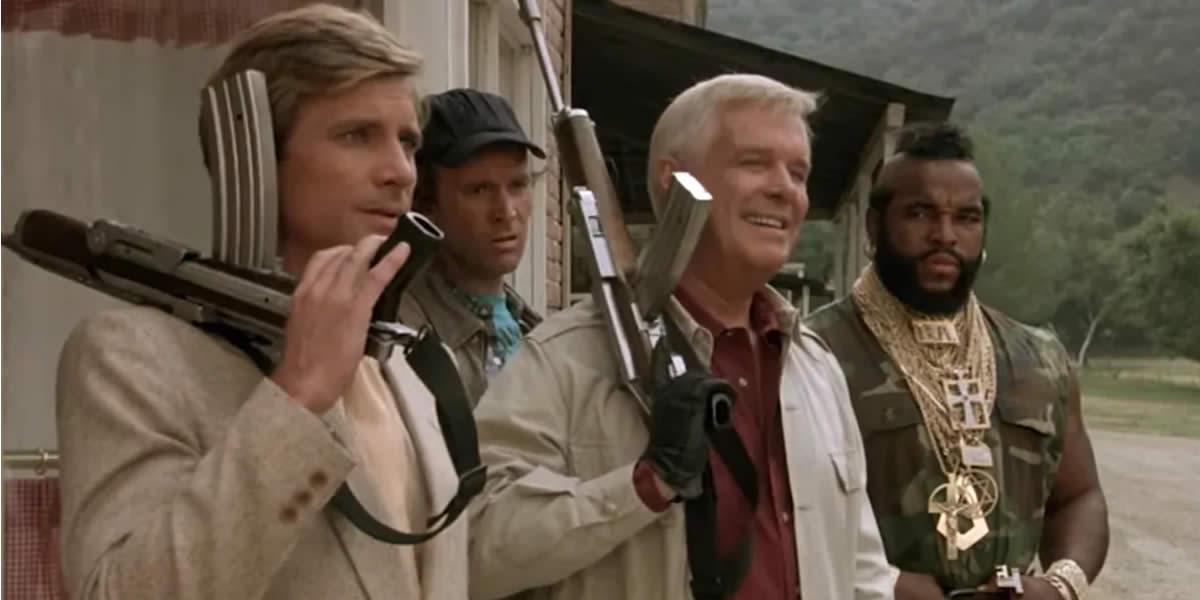
Hannibal Smith was the brains, always smiling like he was three steps ahead of everybody else. Templeton “Face” Peck was the charmer, able to talk his way into almost anything. B.A. Baracus was the muscle, tough as nails on the outside but often carrying a much softer heart underneath all that gold and growling. And “Howling Mad” Murdock was the wild card, the chaotic soul who reminded us that sometimes the people who seem the strangest are the ones who understand pain the deepest.
Together, they became a kind of traveling rescue mission.
That is what made The A-Team special. It wasn’t just about winning. It was about restoring dignity.
The bad guys on the show were usually bullies. Greedy landowners. Crooked businessmen. Thugs taking advantage of decent people. They weren’t cosmic villains trying to destroy the universe. They were the kind of villains that felt real to a kid watching at home — the people who used fear to control others.
And every week, the message was clear: bullies can be beaten.
Not with cruelty. Not with revenge. But with teamwork, courage, creativity, and a little bit of beautifully ridiculous 1980s engineering. Give the A-Team a barn full of junk, a welding torch, and ten minutes, and suddenly they had built an armored cabbage truck with rocket launchers and justice in the glove compartment.
That kind of thing mattered to 80s kids.
Because behind the fun, the show taught a simple but powerful lesson: when people stand together, the little guy is not so little anymore.
B.A. might have looked intimidating, but he often represented protection more than violence. He was the guy you wanted standing between a frightened family and the men trying to hurt them. Face, for all his smooth-talking ways, usually used his charm to open doors for people who had no access. Murdock brought laughter into impossible situations. And Hannibal believed in the plan even when everyone else thought it was crazy.
That belief was contagious.
The A-Team gave viewers a fantasy that still feels comforting today: what if help actually came? What if someone heard you? What if the powerless were not left powerless forever?
In a world that often feels colder, meaner, and more divided, there is something deeply hopeful about revisiting The A-Team. It reminds us that kindness does not always have to be soft-spoken. Sometimes kindness kicks down the door, fires up the welding torch, builds a tank out of farm equipment, and tells the bully, “Not today.”
That may be why the show still lives in the memory of a generation.
It was loud. It was goofy. It was over the top in the best possible way. But at its core, The A-Team was about using strength in service of others. It was about broken people helping broken people. It was about friendship, loyalty, and the belief that no one should have to face injustice alone.
And maybe that is the part we need to remember most.
The world does not always need perfect heroes. Sometimes it just needs people willing to show up. People willing to care. People willing to say, “I know you’re scared, but we’ve got a plan.”
Because when the A-Team rolled into town, hope came with them.
And I pity the fool who doesn’t think that still matters.